CALGARY WEDDING STORIES
Calgary Wedding Photography
Calm, considered wedding photography in Calgary, Banff, and the Alberta foothills, with natural portraits and a thoughtful record of the day.

Calgary as a backdrop: sandstone, gardens and a mountain autumn
Every wedding gallery is partly a portrait of a place. In Calgary that place has more layers than visitors expect: a prairie city with sandstone streets from the 1880s, Victorian gardens tucked between apartment towers, and, an hour and a half to the west, valleys that turn gold for a few weeks each September. Knowing what each backdrop offers, and when it looks its best, helps you choose portrait settings that feel like your own city rather than a generic park.
The most memorable locations are rarely the most famous ones. A familiar street corner, the garden where you had a first date, or a trail you hike every autumn will mean more in twenty years than a viewpoint you visited once. The notes below are a starting point for that conversation.
The sandstone city
After a fire swept through Calgary's wooden downtown in 1886, the town rebuilt in local sandstone, quarried along the Bow River. Many of those buildings still line Stephen Avenue, the pedestrian stretch of 8th Avenue SW, now a national historic district. Their warm, rough stone, arched windows and deep doorways give soft, even light and a sense of history that works well for both formal portraits and relaxed walking shots. Glass towers rise directly behind them, so a few steps can change the mood from heritage to modern skyline.
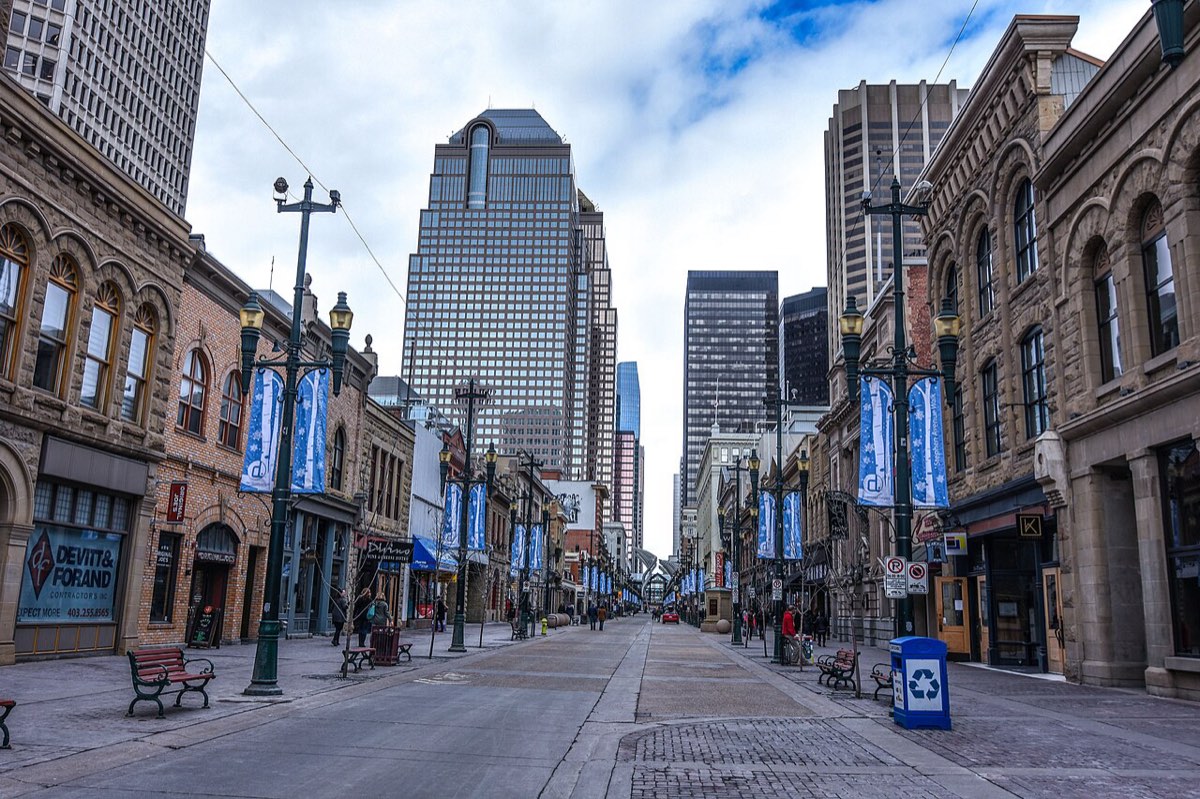
Early morning or a weekday afternoon is the calmest time to photograph here, before patios and lunch crowds fill the street. On a bright day, the north side of the avenue usually stays in open shade, which keeps faces soft and avoids squinting.
Historic houses and gardens
Calgary also has a handful of heritage homes surrounded by public gardens. Lougheed House, built in 1891 for the family of Senator James Lougheed in the Beltline, stands behind the formal Beaulieu Gardens, with stone balustrades, flower beds and wide paths that suit both small groups and quiet portraits of two. Gardens like these are at their fullest from late June to August, when the short prairie summer brings everything into bloom at once.
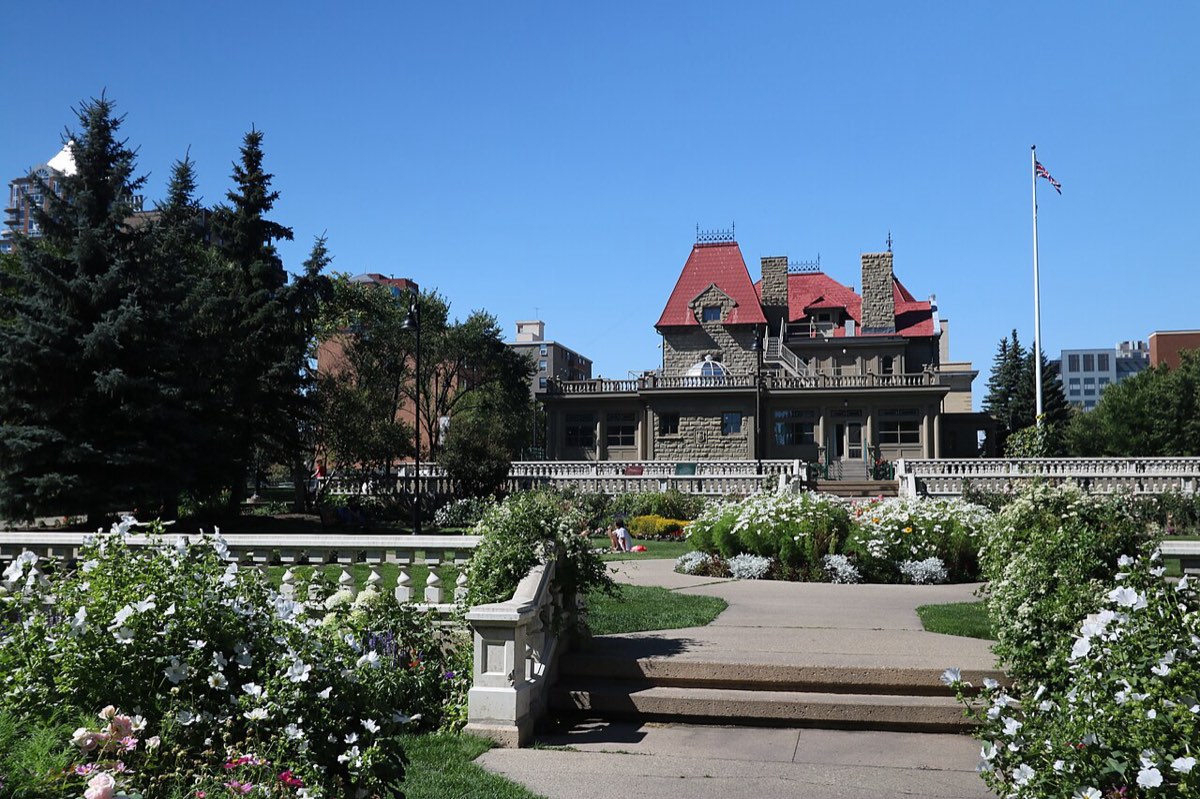
Historic sites usually have their own rules for photography, especially for wedding parties, so check booking and any fees directly with the site before planning a visit. The same goes for busy weeks in the city calendar: in early July, during the Calgary Stampede, downtown streets, hotels and restaurants fill quickly, which affects both logistics and the look of your photographs.
Larch season in the Rockies
For many Albertans the most beautiful time in the mountains is late September. Subalpine larches, conifers that lose their needles each winter, turn bright gold for roughly two to three weeks before the first heavy snow. High valleys in Banff National Park and Kananaskis Country glow against grey rock and early snow, and the light stays low and warm through much of the day.
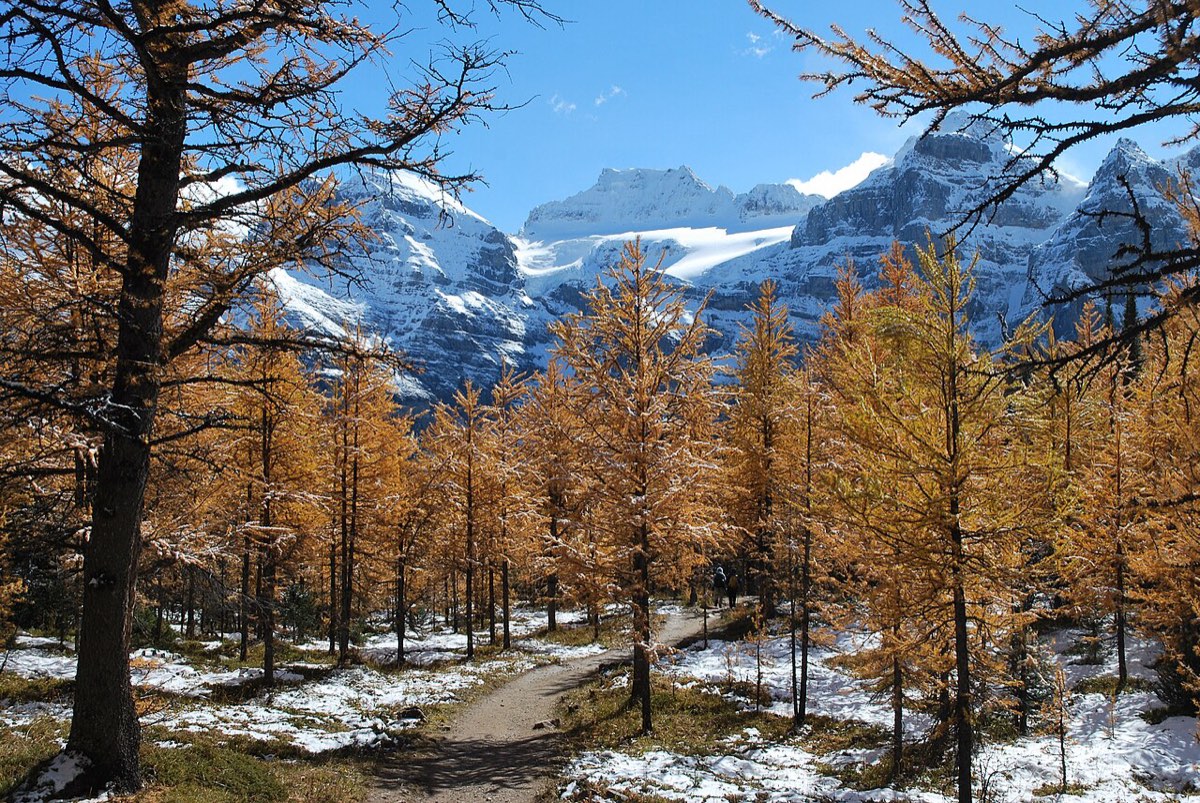
Larch stands grow near the tree line, so reaching them usually means a real hike of an hour or more, and the trails are popular on autumn weekends. Weather at that height changes quickly: a sunny morning can turn to sleet by mid-afternoon, so warm layers, proper footwear and a flexible start time matter as much as the outfit.
For an elopement or a couple's session, the walk itself can become part of the story. Read the Kananaskis elopement guide for ideas, and continue below for the practical side of booking and planning your day.
A Calgary celebration in chapters
A wedding day in Calgary may move from a quiet morning indoors to a ceremony beneath open sky, then finish among city lights. Think of those parts as chapters with different energy. Preparation photographs benefit from a clear surface and a few minutes without visitors crossing the room. Before guests arrive, a wide view can establish the venue; later frames can follow conversations, greetings, and small changes in the room. A simple sequence gives the gallery a beginning, a gathering point, and a lively close.
Choose portrait places close to the route
Portrait locations work best when they belong naturally to the day. A sheltered lane beside the ceremony venue, a pocket garden near the reception, or a bright indoor corner can create variety without a long transfer. Check how the group will get there, where a vehicle can stop, and whether the walking surface suits everyone invited. If a favourite view requires a drive, decide whether it is worth the time away from guests. One well-chosen setting often tells more than several rushed stops.
Let the people shape the photographs
A short family list keeps the formal part calm. Put the largest groups first, then move through combinations that change only a few people at a time. Share names and pairings with one relative who can gather everyone; the photographer can concentrate on expressions and light instead of calling names. After those requested frames, leave space for unplanned exchanges: a greeting at the door, a hand on a shoulder, a laugh during dinner. These moments connect the planned portraits to the atmosphere around them.
Build a visual thread through the day
A cohesive gallery can move between broad scenes and intimate details without making every photograph look alike. Repeat a few visual cues—warm wood, a particular flower, the prairie sky, or the colour of a table linen—then vary distance and viewpoint. Photograph the ceremony room before it fills, return to it when guests are gathered, and include the path between spaces. The changing context gives familiar details meaning. Careful editing can preserve that rhythm while keeping colour and contrast consistent from morning to evening.
Leave breathing room between fixed moments
Mark ceremony start, meal service, speeches, and any venue closing time before arranging portrait windows. A workable afternoon might allow a brief family grouping after the ceremony, a ten-minute couple walk nearby, and then an unhurried return to guests. Add time for coats, elevators, parking, and gathering people; maps rarely account for a group moving together. Keep one optional portrait stop that can be dropped without affecting dinner. A flexible schedule protects the moments everyone came to share.
A Calgary day with room to breathe
A downtown ceremony and a foothills reception ask for different pacing, even when both fit inside one calendar day. Start by marking the moments with a fixed start time, then place portraits near locations already on the route. For example, a short walk from a ceremony room to a nearby shaded street can create variety without putting a second car transfer into the schedule. Keep the family grouping list small enough to read at a glance, identify one person who knows the names, and let the rest of the coverage follow the natural movement of the gathering. The result is a record of place and connection without turning the day into a production.
What to settle first when you book a Calgary photographer
Most couples start by comparing galleries, but the most useful first conversation is about logistics. Three facts shape almost every photograph you will receive: where the ceremony happens, what time it starts, and how far the reception is from it. A four o’clock ceremony in a downtown hotel and a four o’clock ceremony on a ranch west of the city produce very different afternoons. Once those details are written down, coverage hours, portrait windows, and travel can be planned honestly instead of guessed.
Count the light, not only the hours
Calgary sits far enough north that daylight changes dramatically through the year. Around the June solstice the sun sets close to ten in the evening, so the warm, low light many couples hope for arrives after dinner, often in the middle of speeches. In December it sets at about half past four, which means outdoor portraits usually happen before the ceremony or not at all. Look up the sunset time for your date before you fix the order of the day; it moves the schedule more than any other single factor. If evening portraits matter to you, ask your planner for a twenty-minute gap that can slide by half an hour in either direction.
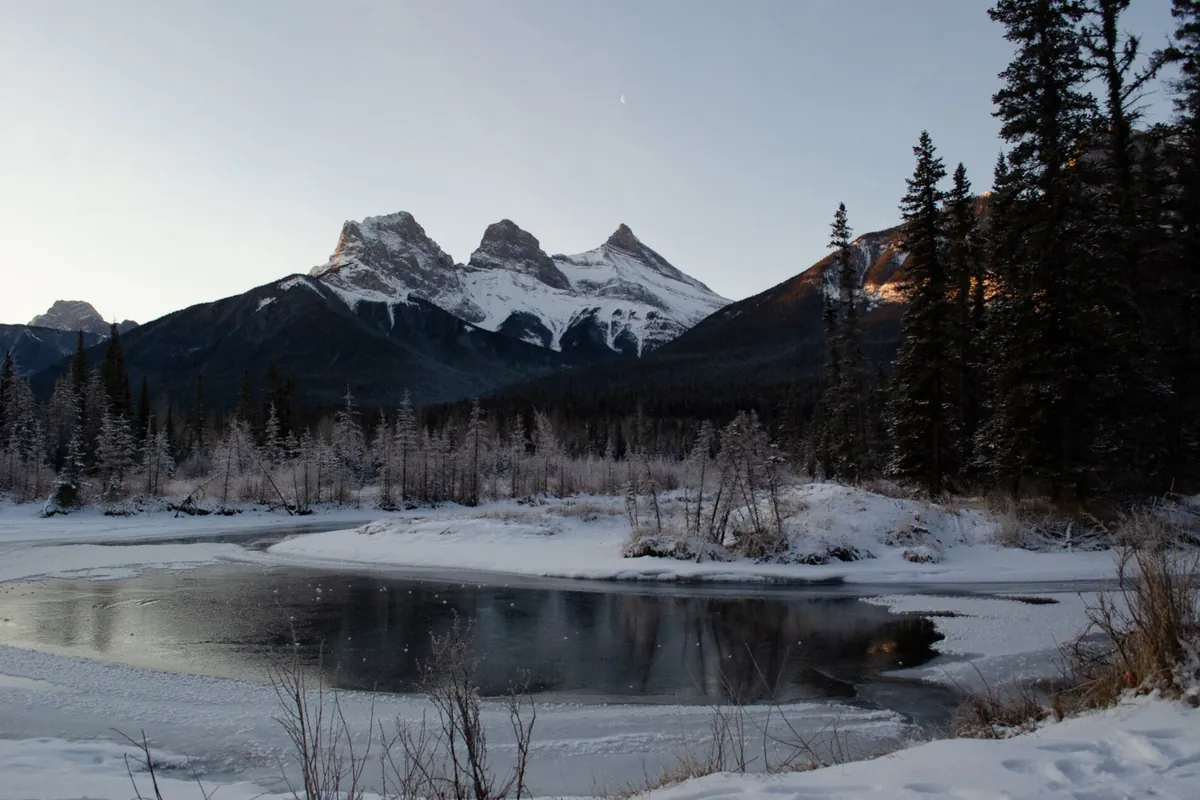
Winter asks for a slightly different plan rather than a lesser one. The sun stays low all day, so even early afternoon has the soft, side-on light that summer only offers at dusk, and fresh snow lifts shadows under the eyes the way a reflector would. The trade-off is cold hands and a short window. Keep outdoor portraits to ten or fifteen minutes, have a warm vehicle or lobby a few steps away, and carry gloves that come off quickly for ring close-ups. In the mountain towns the valley floor can fall into shade an hour or more before the official sunset, because the peaks block the sun long before the horizon does.
Plan for chinooks and open wind
Southern Alberta weather can turn within an afternoon. A chinook can lift a February day well above freezing, and the same warm wind makes veils, loose hair, and tall florals hard to manage on an exposed hilltop. Keep at least one portrait spot with shelter on the list, such as the lee side of a building, a stand of spruce, or a covered entrance, even when the forecast looks perfect. Couples who expect a little wind tend to look relaxed in their photographs; couples who fight it tend to look braced against it.
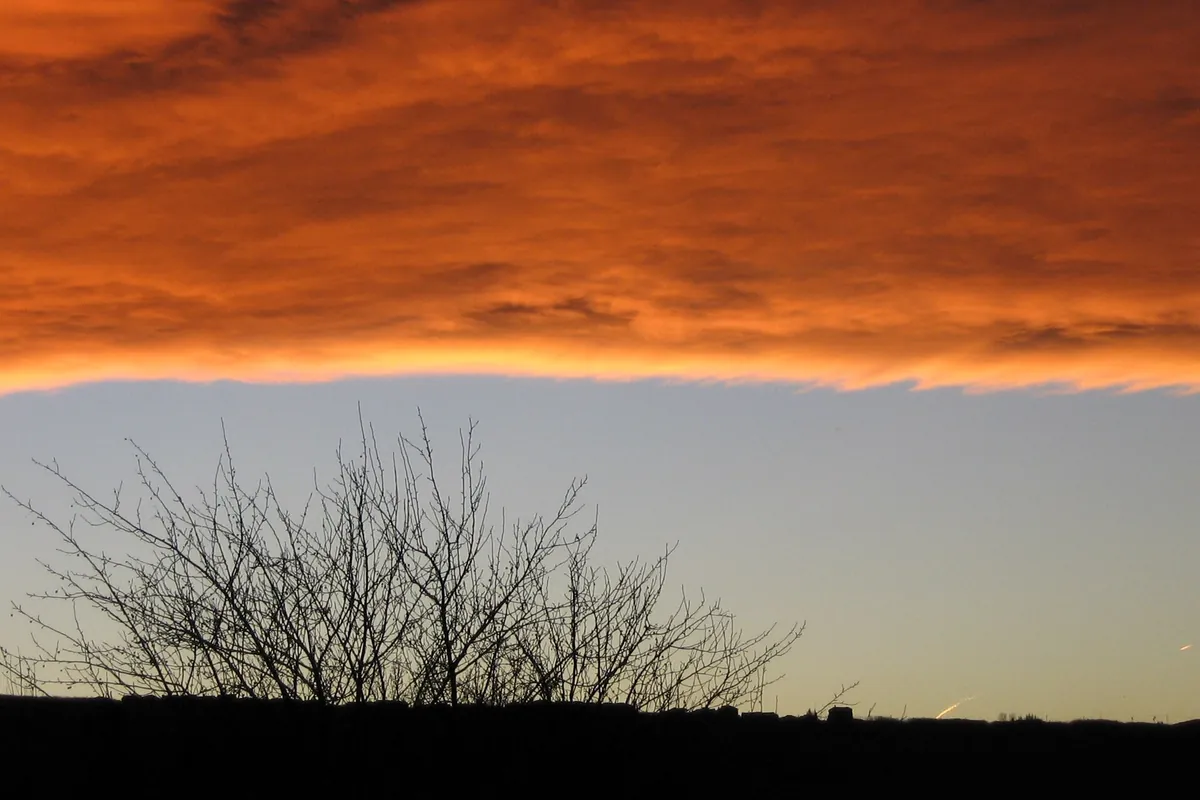
The arrival of a chinook is often easy to read from the ground. A long band of clear sky opens beneath a flat ceiling of cloud to the west, and at sunrise or sunset the underside of that cloud can turn orange and red. It is one of the most striking skies in the province, and it is worth a few frames if it appears during your day, but it usually means stronger gusts within hours. Pin the veil, choose a bouquet that is not too tall, and keep a hair tie in a pocket.
City, foothills, or mountains
The setting decides more than the background. A downtown celebration keeps everyone close together, so portraits can happen in short bursts between other parts of the day. A foothills ranch or golf course trades skyline for wide horizons and big weather, and it usually means guests stay in one place from ceremony to last dance. A ceremony in Banff, Canmore, or Kananaskis adds travel on both ends: about ninety minutes from Calgary in good conditions, longer on a summer weekend or in snow on the Trans-Canada.
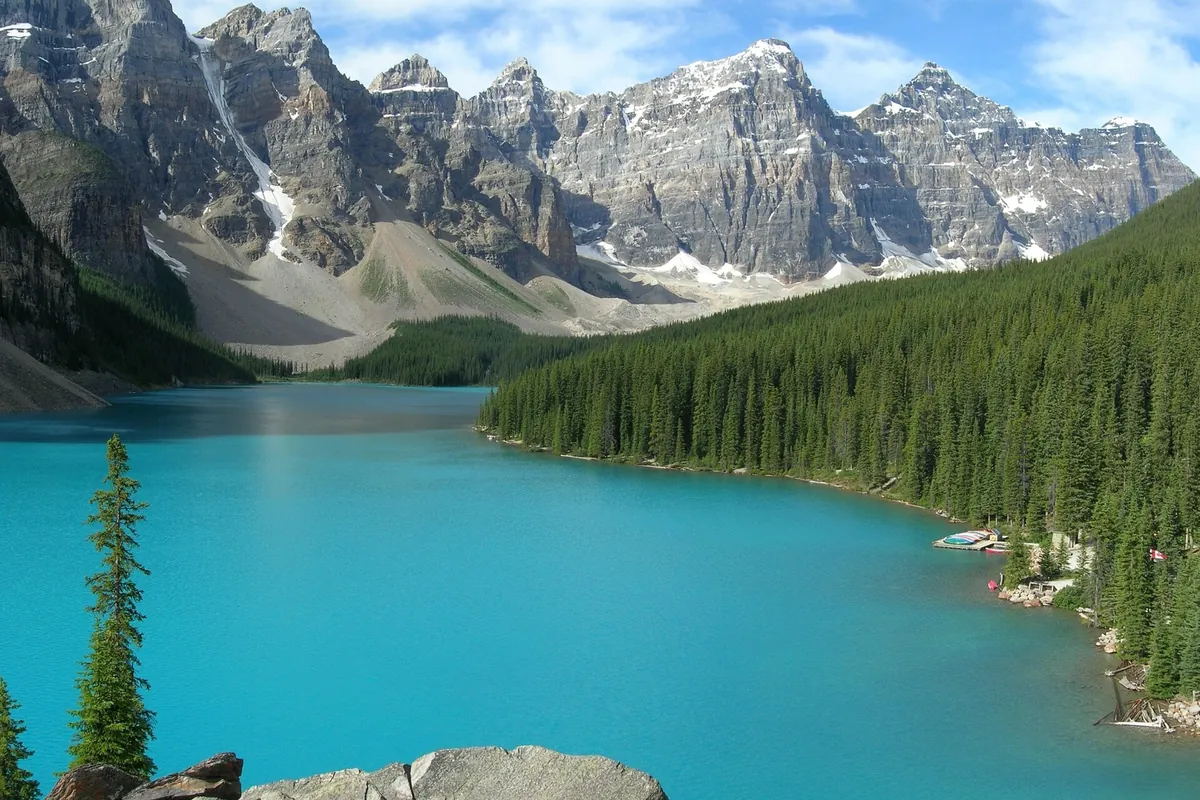
The best-known viewpoints also come with practical rules. Moraine Lake, for example, can no longer be reached by private car; visitors arrive by Parks Canada shuttle or a commercial bus, which affects when a couple can be there and how much they can carry. Photographers working in the national parks need a Parks Canada business licence, and some ceremony sites need their own permit. Ask about both early, and consider a quieter shoreline or forest pull-off that gives the same mountain feeling without a crowd standing behind you.
Decide what the finished collection is for
Some couples want a large digital gallery to share with relatives in other provinces or overseas. Others care most about one printed album that will still be handled in twenty years. That choice changes how the day is photographed. Coverage meant for an album leans on varied distances, with wide views of the room, mid-range moments between people, and close details, so the pages can be paced like a story. If a book is the goal, say so at the first meeting and read about how an album is sequenced before deciding how many hours you need.
Set the details aside before the morning starts
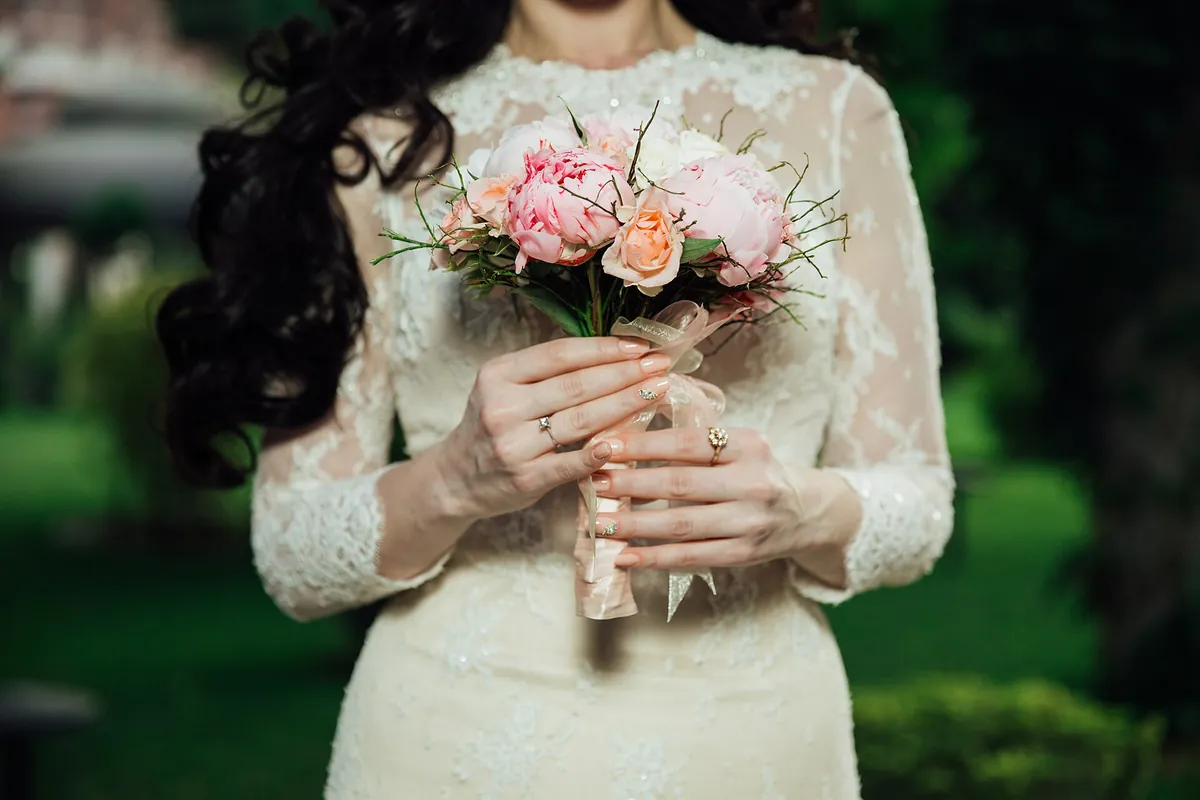
Small objects disappear fast on a wedding morning. The night before, put everything you would like photographed into one box: rings, the invitation suite and a spare envelope, a piece of family jewellery, shoes, cufflinks, a letter you plan to exchange. It saves twenty minutes of searching and keeps those things clean and in one room. Flowers need a little care too. Ask the florist to deliver the bouquet early, keep it in water away from windows and car dashboards, and pat the stems dry just before it is handed over, so it holds its shape through the ceremony and into the portraits.
Couples marrying in the mountains rather than the city can use the same approach with more travel built in. The mountain wedding timeline walks through realistic buffers for the drive between Calgary, Canmore, and Banff, including the time it takes a group of guests to park and walk to a ceremony site.
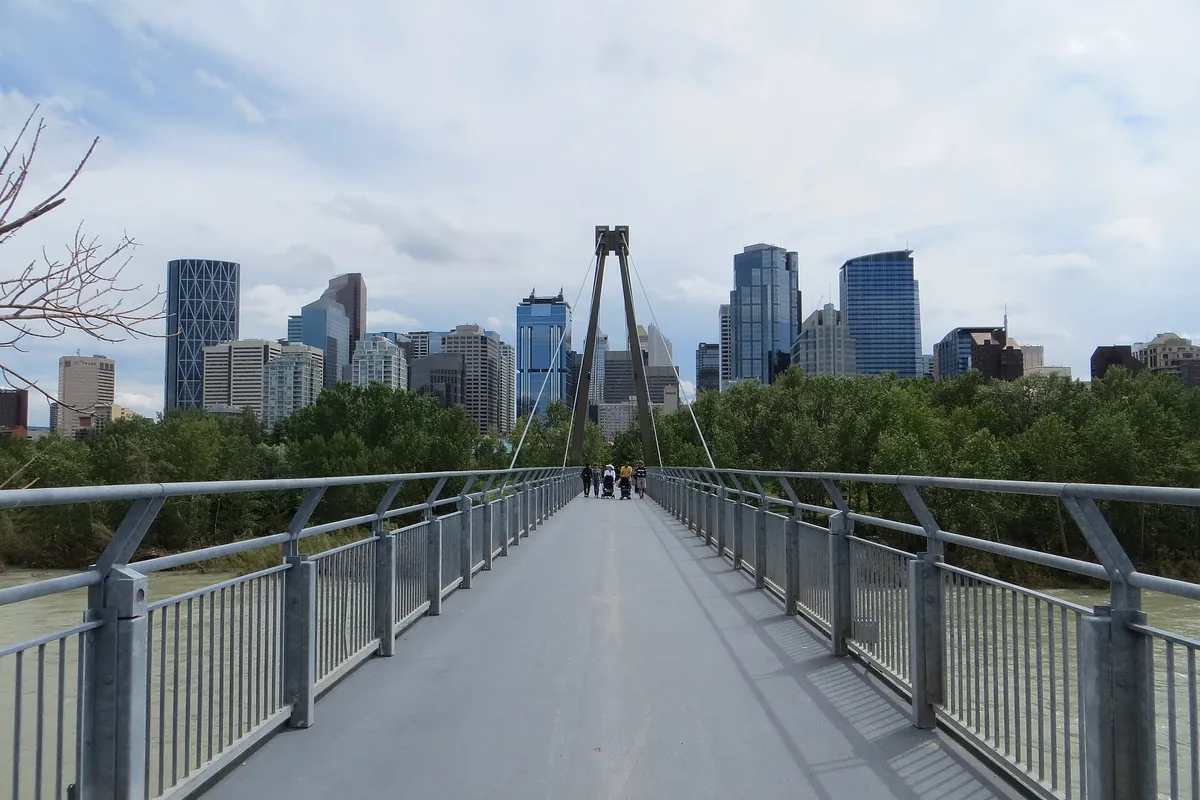
Image sources on Wikimedia Commons: Bow River bridge (CocoRoux, CC BY-SA 4.0), Three Sisters (KaleighAlysse, CC BY-SA 4.0), chinook arch (public domain), Moraine Lake (Tobias Alt, CC BY-SA 4.0), bridal bouquet (Alvin Mahmudov, CC0). Images were cropped and resized.
Questions couples ask before booking
Should the ceremony and portraits happen in the same place?
Usually that is the easiest choice. Every move between locations costs time for loading cars, parking, and gathering people again, and that time comes out of the portrait window or the cocktail hour. A venue with two or three different backdrops within a short walk often gives more variety than a single distant viewpoint reached in a hurry.
Which season gives the best light around Calgary?
Each season has a different character rather than a single best one. Late spring and early autumn give long, soft evenings at a reasonable hour. Summer brings very late sunsets and bright midday sun, so shade matters. Winter offers clean, low light and snow that reflects it, but the day is short and portraits need to be planned early.
Can we see a complete wedding gallery before deciding?
It is a fair request and worth making with any photographer. A portfolio shows the strongest frames from many weddings; a full gallery from one day shows how the whole story is covered, including dim reception rooms, family groupings, and the quieter moments between the highlights.
How long does it take to receive the photographs?
Turnaround varies between photographers and between seasons, so confirm it before you book. A common pattern is a small preview within the first week or two, followed by the full edited gallery several weeks later. Album design begins once you have chosen favourites from the complete set.
Is a mountain ceremony realistic in winter?
Yes, with a shorter outdoor plan. Choose a ceremony spot close to parking or a lodge, check road conditions on the morning of the day, and keep a heated indoor fallback booked. Winter mountain light is low and soft for most of the day, so twenty well-planned minutes outside can give a full set of portraits.